
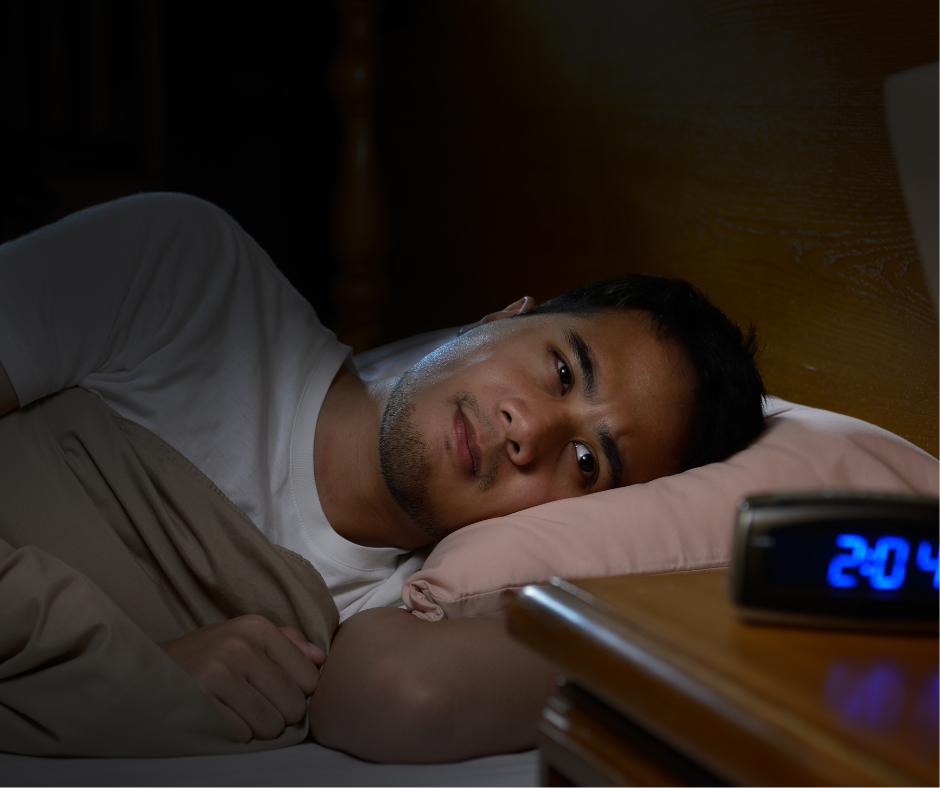
Struggling with anxiety, high stress or waking up exhausted? Poor sleep may be the missing link. Research shows that disrupted sleep patterns keep your body stuck in the ‘fight-or-flight’ mode, which sees increased cortisol levels, reduces deep rest, and amplifies anxiety. By understanding the three systems that regulate sleep and learning how to reset them, you can finally nip anxiety in the bud and create a calmer and more focused you.
- Sleep is governed by three main systems: the homeostatic (sleep drive), circadian (body clock), and arousal (mental relaxation) systems.
- Caffeine, stress, and irregular routines can disrupt these systems, making it harder to fall and stay asleep.
- Chronic poor sleep raises cortisol and traps the body in a constant stress response, leading to anxiety, overwhelm, and low mood or mood swings.
- Improving sleep quality can significantly reduce anxiety and depression.
- With Health Coaching and CBT-I (Cognitive Behavioural Therapy for Insomnia), most people can restore good sleep within 6–8 weeks.
What causes sleep problems linked to anxiety and stress?
Many people ask: “Why do I feel anxious, wired, or overwhelmed even when I’m tired and ready to sleep?”
The answer lies in how sleep is created by the three interconnected systems — each one influenced by our daily habits, mindset and your environment.
The answer lies in how sleep is created by the three interconnected systems — each one influenced by our daily habits, mindset and your environment.
1. The Homeostatic system: building the sleep drive
This system, often called the sleep drive, builds tiredness throughout the day through a chemical in the brain called adenosine. As adenosine builds up through the day, we feel increasingly sleepy.
However, caffeine blocks adenosine receptors, temporarily tricking the brain into feeling alert. The problem? Caffeine has a half-life of 5 - 8 hours, meaning that it takes the body 5 - 8 hours to remove 50% of this chemical.
What it means in reality for you? That cup of coffee or tea you drank at 5 pm could still be circulating through your bloodstream at bedtime, making it harder to relax or stay asleep.
However, caffeine blocks adenosine receptors, temporarily tricking the brain into feeling alert. The problem? Caffeine has a half-life of 5 - 8 hours, meaning that it takes the body 5 - 8 hours to remove 50% of this chemical.
What it means in reality for you? That cup of coffee or tea you drank at 5 pm could still be circulating through your bloodstream at bedtime, making it harder to relax or stay asleep.
To strengthen your sleep drive:
- Avoid caffeine after 2 pm. Some people can metabolise caffeine more quickly than others, but it is still important to wind down 8 hours from your sleep time to start avoiding caffeine from then onwards.
- Create a habit of getting outdoors daily — natural light exposure helps regulate your sleep-wake cycle and also helps you generate sleepiness and be ready for drop off in the evening.
- Staying active is also important for your sleep, as well as protecting your health. Physical tiredness is a crucial component of the sleep drive. If you don’t have enough physical tiredness, you may not sleep through the night. Schedule exercise daily.
2. The Circadian rhythm: your internal body clock
Your circadian rhythm is your internal clock, controlled by the suprachiasmatic nucleus (SCN) in your brain. This cluster of 20,000 neurons responds to light, darkness, temperature and routine to regulate the sleep and wake cycles.
The SCN also balances two key hormones:
The SCN also balances two key hormones:
- Cortisol – the energy and alertness hormone, which starts getting secreted around 5:30–6 am and reaches its highest by 9 am.
- Melatonin – the sleep hormone, which rises as cortisol starts declining at 9 - 9:30 pm.
When your routine is inconsistent — staying up late, using digital devices, or you have irregular sleep times — these hormones fall out of sync.
Tip: Align your bedtime and wake-up time within the same 30- minute window every day to help you reset your circadian rhythm.
Tip: Align your bedtime and wake-up time within the same 30- minute window every day to help you reset your circadian rhythm.
3. The Arousal system: calming the mind for sleep
Even when your body is tired, your mind may stay active — processing thoughts, worries, or work-related issues. This is the arousal (or cognitive) system at work.
When mental arousal is high, sleep becomes fragmented and light, your body cannot get into deep restorative sleep, which is paramount for repair and restructure. People with insomnia often experience a vicious cycle of worry: the more they think about their inability to sleep, the harder sleep becomes.
Insomnia is diagnosed when poor sleep occurs at least three nights per week for three months or longer, often due to persistent cognitive overactivity or stress.
Stress-induced insomnia can cause people to fall asleep from exhaustion but wake up around 2–3 am, as cortisol spikes prevent deep, restorative sleep.
When mental arousal is high, sleep becomes fragmented and light, your body cannot get into deep restorative sleep, which is paramount for repair and restructure. People with insomnia often experience a vicious cycle of worry: the more they think about their inability to sleep, the harder sleep becomes.
Insomnia is diagnosed when poor sleep occurs at least three nights per week for three months or longer, often due to persistent cognitive overactivity or stress.
Stress-induced insomnia can cause people to fall asleep from exhaustion but wake up around 2–3 am, as cortisol spikes prevent deep, restorative sleep.

How poor sleep fuels anxiety, stress and overwhelm
When we sleep deeply, the body activates the relaxation response — the opposite of the stress (fight-or-flight) response.
However, when deep sleep is disrupted, the body remains stuck in the stress response, with elevated cortisol levels. Over time, this leads to:
However, when deep sleep is disrupted, the body remains stuck in the stress response, with elevated cortisol levels. Over time, this leads to:
- Persistent tension and fatigue
- Racing thoughts and heightened anxiety
- Difficulty focusing or staying calm
This chronic state of alertness creates a false sense of danger — the brain signals ‘something’s wrong’ even when life is safe.
To cope, many people turn to caffeine for energy, but caffeine raises cortisol further, worsening anxiety and disrupting sleep even more. This cycle of sleep loss → anxiety → caffeine → stress can be broken — but only by addressing sleep at its root.
To cope, many people turn to caffeine for energy, but caffeine raises cortisol further, worsening anxiety and disrupting sleep even more. This cycle of sleep loss → anxiety → caffeine → stress can be broken — but only by addressing sleep at its root.
Does anxiety cause poor sleep, or does poor sleep cause anxiety?
This is one of the biggest questions sleep researchers ask. While both directions are true, growing evidence supports that poor sleep often triggers anxiety and depression, not just the other way around.
When sleep is repaired, anxiety symptoms often decrease dramatically — energy, mood, and focus all improve.
When sleep is repaired, anxiety symptoms often decrease dramatically — energy, mood, and focus all improve.
How a Health Coach can help you restore your sleep
Restoring sleep isn’t about quick fixes — it’s about retraining your body and mind. A Health Coach can help by:
With consistent practice, most people see lasting results in 6–8 weeks, even when they have had months or years of sleep struggles.
- Assessing your sleep schedule and gradually aligning your bedtime and wake time to your natural rhythm.
- Encouraging daily movement and exposure to natural light to strengthen your homeostatic drive.
- Using mindset coaching to help you reframe unhelpful thoughts about ‘broken sleep’ and rebuild trust in your body’s natural ability to rest.
- Creating calming bedtime routines and relaxation practices to quiet the arousal system.
With consistent practice, most people see lasting results in 6–8 weeks, even when they have had months or years of sleep struggles.
CBT-I: proven therapy for insomnia and anxiety
If insomnia has persisted, CBT-I (Cognitive Behavioural Therapy for Insomnia) is the gold-standard treatment.
It helps change both the behaviours and thought patterns that disrupt sleep — and it’s also proven effective for anxiety, depression, chronic pain, and panic attacks.
As a qualified CBT-I practitioner, I integrate these techniques into my coaching to help clients sleep deeply, and reduce their levels of overwhelm and anxiety and feel calmer daily.
It helps change both the behaviours and thought patterns that disrupt sleep — and it’s also proven effective for anxiety, depression, chronic pain, and panic attacks.
As a qualified CBT-I practitioner, I integrate these techniques into my coaching to help clients sleep deeply, and reduce their levels of overwhelm and anxiety and feel calmer daily.
Ready to restore your sleep and reduce anxiety?
You don’t have to stay stuck in the cycle of exhaustion and overwhelm.
Explore my Restore Sleep Programmes — designed to help you reset your body’s natural rhythm, reduce stress, and wake up feeling restored.
Stay healthy, be joyful!
Love,
Katya
Explore my Restore Sleep Programmes — designed to help you reset your body’s natural rhythm, reduce stress, and wake up feeling restored.
Stay healthy, be joyful!
Love,
Katya